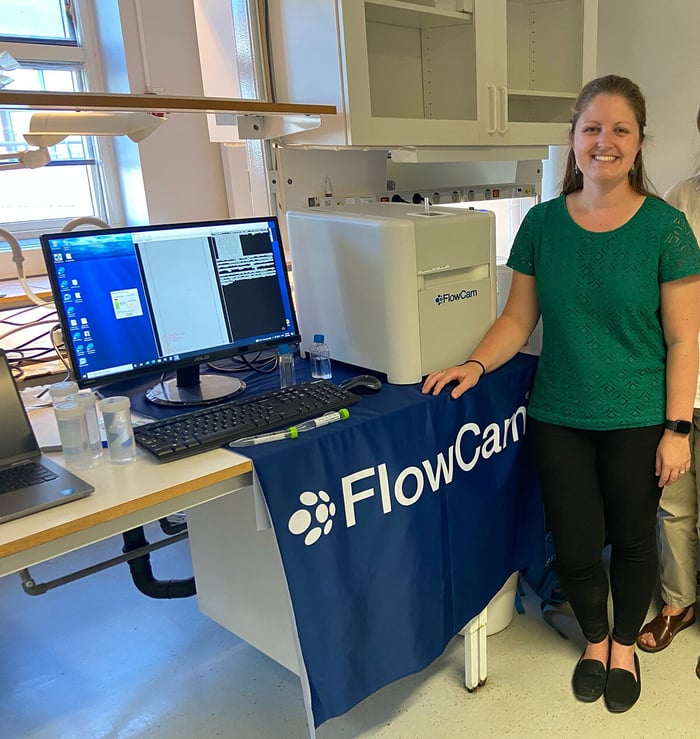
Workshop: Introduction to FlowCam
Flow Imaging Microscopy for Algal Research & Monitoring
Date & Time:
April 5th, 5:30 - 6:30 PM, optional dinner in Middletown to follow
Location:
Wyndham Newport Hotel (same location as the NEAS Meeting)
240 Aquidneck Ave
Middletown, Rhode Island
Room location TBD
Participation:
Attendance will be capped at 10 people
Please register using the form on this page
Many scientists worldwide are interested in modernizing & expediting their algal research & monitoring programs. One common way of doing this is through automated imaging techniques, yet many researchers are not familiar with the capabilities and limitations of such approaches. This knowledge gap can introduce unnecessary risk during the buying process and make it challenging to interpret data from other studies involving imaging data. In this workshop, we will work to eliminate this knowledge gap by learning more about automated imaging techniques such as flow imaging microscopy (FIM).
FIM first started gaining popularity as a technique for researching and monitoring harmful algae in the late 1990s. FlowCam was one of the first FIMs on the market and has been commercially available for almost 25 years.
This workshop is designed for participants who have not used FIM or FlowCam before and who are interested in building proficiency in this widely used technique. The workshop will begin with a 15-minute overview of FIM using FlowCam. This overview will present the history and principles of FIM and case studies on how FlowCam is used for algae research projects and monitoring programs. Following the lecture, attendees will participate in a live FlowCam lesson where they will learn basic skills in instrument setup, data acquisition, and classification. Special focus will be placed on offering key considerations for using FIM in harmful algae research & monitoring, including sample collection & preparation, common freshwater and marine HAB taxa, cell counting & measurement, and frequently asked questions.
Participants will leave this workshop with the ability to:
- Communicate their understanding of the basic operating principles of FlowCam
- Apply a framework to evaluate if/how FIM can expedite their existing workflow
- Reference examples of how FIM has been implemented successfully in other research programs
Contact:
For questions or more information, please contact the workshop convener, Savannah Judge (savannah.judge@fluidimaging.com)